
For the past two decades, Search Engine Optimization (SEO) has been the undisputed crown jewel of digital strategy. We optimized meta-tags, chased backlinks, and prayed to the Google gods for that coveted top spot. But the web is no longer a library of static pages waiting to be searched. It is rapidly becoming an interactive, agentic ecosystem where Artificial Intelligence (AI) doesn’t just read your content—it acts on it. Enter MCP: The Model Context Protocol. This isn’t a buzzword; it is a fundamental rewrite of how machines interact with your website. While SEO helps humans find your door, MCP helps AI agents walk through it.
What is SEO?

Search Engine Optimization is the art and science of making your website more visible to search engines like Google, Bing, or DuckDuckGo. Think of a search engine as a massive digital librarian. This librarian uses automated software called “crawlers” or “spiders” to read billions of pages on the internet. When a user types a query into the search bar, the librarian’s algorithm sifts through its massive index to serve the most relevant and authoritative results.
SEO is the process of structuring your website’s content, code, and backlinks to speak this librarian’s language. It involves optimizing technical elements like site speed and mobile responsiveness, creating content that answers specific user questions, and building a reputation through quality links from other sites. Historically, the goal of SEO was simple: Rank higher, get more clicks, and drive traffic.
However, SEO has always been a game of interpretation. You are trying to guess what the search engine’s algorithm thinks is important. It relies heavily on text, keywords, and historical user behavior. It is a reactive strategy—you build a page, optimize it, and wait for the crawler to index it. In the static age of the internet, this was the ultimate kingmaker.
What are the Types of SEO?
To fully grasp SEO, you must understand that it isn’t a single discipline but a combination of distinct pillars. Here are the primary types of SEO every professional should know:
1. On-Page SEO
This is the content you control directly on your website. It includes optimizing title tags, meta descriptions, header tags (H1, H2), and internal linking structures. It also heavily involves keyword research—understanding the exact phrases your target audience is searching for and weaving them naturally into your content. If SEO is the engine, on-page is the fuel.
2. Off-Page SEO
Off-page refers to actions taken outside of your website to impact your rankings. The most significant factor here is link building, commonly known as “backlinks“. When other reputable websites link to you, it acts as a “vote of confidence” for the search engine. The more authoritative votes you have, the higher you rank. Social media marketing and brand mentions also fall under this umbrella.
3. Technical SEO
This is the infrastructure layer. Technical SEO ensures that search engine crawlers can easily access, read, and index your website. It focuses on site architecture, XML sitemaps, structured data (Schema markup), Core Web Vitals (loading speed, interactivity, visual stability), and mobile optimization. If On-Page is the fuel, Technical is the engine block.
4. Local SEO
For businesses with a physical location, Local SEO is critical. It optimizes your online presence to attract local customers. This includes managing Google Business Profile listings, ensuring NAP (Name, Address, Phone number) consistency, and gathering positive local reviews.
5. E-commerce SEO
A specialized branch for retail sites. It involves optimizing product descriptions, category pages, image alt text, and user reviews. It focuses on transactional keywords (e.g., “buy,” “price,” “discount”) to convert browsing traffic into paying customers.
Why is SEO Needed?
If you build a website in the middle of a forest and don’t tell anyone, does it make a sound? Probably not. SEO is the megaphone that announces your presence to the world.
Visibility and Traffic: The primary driver for SEO is that most online experiences begin with a search engine. A vast majority of users never scroll past the first page of results. Without SEO, you are invisible.
Credibility and Trust: High search rankings imply authority. Users inherently trust Google’s algorithm to point them toward reputable sources. If you rank highly, you inherit a portion of that trust.
Cost-Effectiveness: Unlike paid ads (PPC), organic traffic is free. While SEO requires an investment of time and resources, the long-term return on investment (ROI) is significantly higher than constant ad spend. It provides a sustainable, long-term asset.
User Experience: Good SEO is, fundamentally, good User Experience (UX). When you optimize for site speed, mobile-friendliness, and clear navigation, you aren’t just pleasing crawlers; you are creating a frictionless environment for your actual human visitors.
Where can I perform the SEO Check of my website?
When we talk about “performing SEO“, we aren’t just doing it on our own site. We use a suite of external tools, platforms, and communities to analyze, audit, and optimize. Here are the best digital real estate locations for executing a top-tier SEO strategy:
1. Google Search Console (GSC)
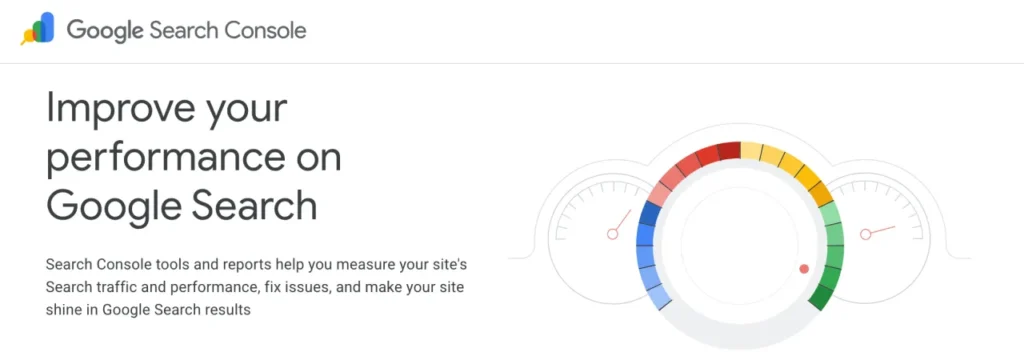
This is your direct line to the Google algorithm. It is non-negotiable. GSC tells you exactly how Google sees your site. You can see which queries drive impressions, your average click-through rate (CTR), and index coverage issues. It is the source of truth for technical health and performance data.
2. Ahrefs & Semrush (Competitive Intelligence Platforms)
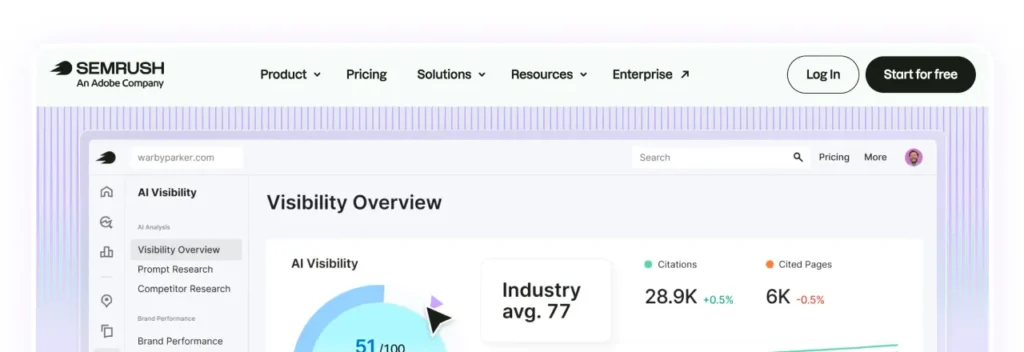
These are the Swiss Army knives of the SEO professional. They host massive databases of backlinks and keyword rankings. You don’t just perform SEO on these sites; you use them to spy on competitors. They allow you to see which keywords your rivals are ranking for and the exact backlinks they have earned. This “gap analysis” is crucial for strategy.
3. Bing Webmaster Tools
While Google dominates, Bing powers Yahoo and other search engines. It is a fantastic secondary source of data and often provides more granular insights into site-crawling errors that GSC might miss. For European markets, a healthy presence on Bing is vital.
4. Screaming Frog SEO Spider
This is software you run locally, but it interacts with your site’s architecture. It crawls your website like a search engine and shows you technical errors in real-time: broken links, duplicate titles, missing meta descriptions, and oversized images. It’s the mechanic’s diagnostic tool.
5. Moz & Majestic
These platforms focus heavily on link metrics. They offer “Domain Authority” (DA) or “Trust Flow” scores. While not official Google metrics, they are industry standards for gauging the quality of your backlink profile.ostic tool.
6. Online Communities (Reddit, Quora, and LinkedIn)
SEO isn’t just about data; it’s about understanding human intent. Platforms like Quora and relevant subreddits are goldmines for discovering “People Also Ask” questions that aren’t yet saturated. You perform SEO in these communities by listening to the language users use, which informs your content strategy.
7. ChatGPT / Claude (The New Era Search Engines)
This is the crux of our transition. In 2026, large language models are increasingly used as search interfaces. While not an “SEO tool” in the traditional sense, they act as discovery layers. You must ensure your data is available for ingestion—this blends the line into MCP territory.
What is MCP?
MCP stands for Model Context Protocol. Introduced by Anthropic, it is an open standard that defines a universal way for AI models (like assistants or agents) to securely connect with external tools and data sources.
To simplify: Imagine your web app is a library. SEO is the library’s signboard and catalog index on the sidewalk, helping passersby know what’s inside.
MCP is the security guard and the elevator.
When an AI agent arrives at your library, it doesn’t need the signboard; it needs to know if it can walk in, if the books are in a language it can read, and if it can perform actions (like checking out a book). MCP provides the protocol—the contract—that allows AI to understand your API endpoints, interact with your database, or execute commands. It is essentially “REST API on steroids” but tailored specifically for conversational AI.
MCP doesn’t care about keywords. It cares about functions. It standardizes how a chatbot can say, “Book me a flight,” and your travel site’s architecture instantly recognizes and executes the request.
What is the Need for MCP?
Why do we need MCP? Because the way we compute is shifting from “clicking” to “conversing.”
1. The Rise of Agentic AI
We are moving toward an “agentic web” where AI agents perform tasks on behalf of humans. If your website cannot be parsed and understood by these agents, you will be locked out of the next generation of traffic. Users will not visit your site to search for a product; they will simply ask their AI assistant to “find the best deal,” and the AI will use MCP to check your inventory directly.
2. The Limitations of APIs
While APIs exist, they are disjointed. Every service has a different authentication method, data format, and rate limit. MCP acts as a universal translator, drastically reducing the integration time for AI developers. It acts as a “USB-C port for AI,” allowing any compatible model to plug into your web architecture without custom coding.
3. Context Retention
MCP allows the AI to maintain context across multiple actions. For example, the AI can remember your budget, compare it against your site’s data, and present a summary—all while staying within the secure confines of the protocol. It bridges the gap between static data and dynamic execution.
What is the Difference Between SEO and MCP?
This is where the paradigm shift becomes starkly visible. SEO and MCP are not just different tools; they operate on entirely different planes of logic. Here is a detailed breakdown:
1. Core Objective
- For SEO: To rank well in search results.
- For MCP: To enable machine-to-machine (AI) interaction.
2. Target Audience
- For SEO: Human Users reading on a screen.
- For MCP: AI Agents acting on behalf of a user.
3. Primary Language
- For SEO: Keywords, Backlinks, HTML Tags.
- For MCP: JSON, APIs, Functions, Authentication.
4. Action Mechanism
- For SEO: Passive: The user sees a link and clicks.
- For MCP: Active: The AI invokes a function and executes a task.
5. Data Structure
- For SEO: Optimized for readability (text, images).
- For MCP: Optimized for parse-ability (schemas, endpoints).
6. Entry Point
- For SEO: The Search Engine Result Page (SERP).
- For MCP: The AI Model’s internal prompt/context.
7. Success Metric
- For SEO: CTR (Click Through Rate) and Time on Page.
- For MCP: Task Success Rate and Latency/Execution time.
8. Lifespan
- For SEO: Content decays; algorithms update frequently.
- For MCP: Protocol is versioned and standard-based; more persistent.
The Philosophical Shift
SEO is a discovery mechanism. It answers the question, “Can the user find us?” It relies on external validation (backlinks) and semantic matching (keywords).
MCP is an interoperability mechanism. It answers the question, “Can the machine use us?” It relies on technical standardization and security.
A Real-World Analogy
Imagine a restaurant.
SEO is the bright neon sign on the highway, the glowing reviews on Yelp, and the enticing menu posted in the window. It gets people in the door.
MCP is the automated ordering kiosk, the kitchen display system that sends the order directly to the chefs, and the payment terminal that instantly processes the bill. It handles the transaction after the human arrives—but wait, what if the customer is a robot?
If the customer is an AI, the neon sign is useless. The AI doesn’t need to “see” the restaurant; it needs the restaurant’s API to accept an order directly. In the MCP world, the AI doesn’t click; it acts.
Why MCP is More Important (Right Now)?
In the context of the future of web architecture, why does MCP outweigh traditional SEO? Because SEO is saturating.
The first page of Google is largely occupied by paid ads and high-authority domains. Organic real estate is shrinking. Meanwhile, the adoption of LLMs is exploding. We are seeing the rise of “zero-click” searches, where the AI provides the answer directly in the chat interface without the user ever visiting your site. If you rely only on SEO, you are fighting a losing battle for a shrinking piece of the pie.
MCP, however, allows you to own the backend of that interaction. Even if the user never clicks on your domain, if an AI agent uses your MCP endpoint to retrieve data or place an order, your business still wins. You are securing a revenue stream that bypasses the browser entirely.
Furthermore, MCP lowers the barrier to integration. A small startup with no blog content can create an MCP-compliant API and immediately be accessible to millions of AI users, competing directly with giants who rely on decades of SEO history.
Conclusion
To be clear: SEO is not dead. It is still crucial for brand awareness and capturing those human users who prefer traditional browsing. If you ignore SEO, you will miss out on the existing 5 billion internet users. It remains the bedrock of digital marketing.
However, to declare SEO the “kingmaker” of modern web architecture would be a profound misjudgment. The web is evolving into an API-driven, conversation-first ecosystem. The kingmaker of 2026 and beyond is MCP. It transforms your website from a static billboard into a dynamic utility.
Your competitors are optimizing their metadata; you should be optimizing your endpoints. Your rivals are hunting for backlinks; you should be defining your function schemas.
The greatest advantage of adopting MCP now is the first-mover advantage. As AI agents proliferate, they will prioritize sites with clean, secure, and robust MCP implementations. It is the credential of trust for the machine age.
So, by all means, keep your SEO sharp. But shift your strategic focus. Build for the agent. Standardize your APIs. Embrace the Model Context Protocol. Because in the architecture of the future, the king isn’t the one with the loudest voice—it’s the one with the handshake that any machine can trust.
Ready to future-proof your web strategy?
At Teckut, we specialize in migrating legacy architectures to MCP-ready ecosystems. Whether you are a startup or a multinational enterprise, the transition to agentic web design begins with a single step. Contact us to audit your current MCP compatibility today.